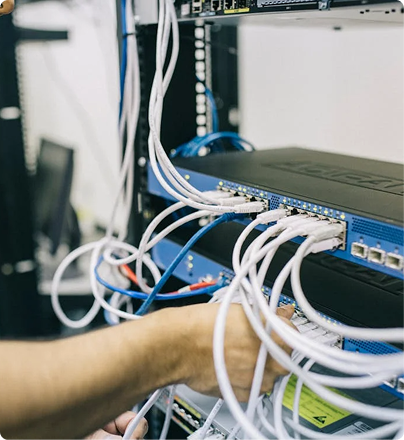
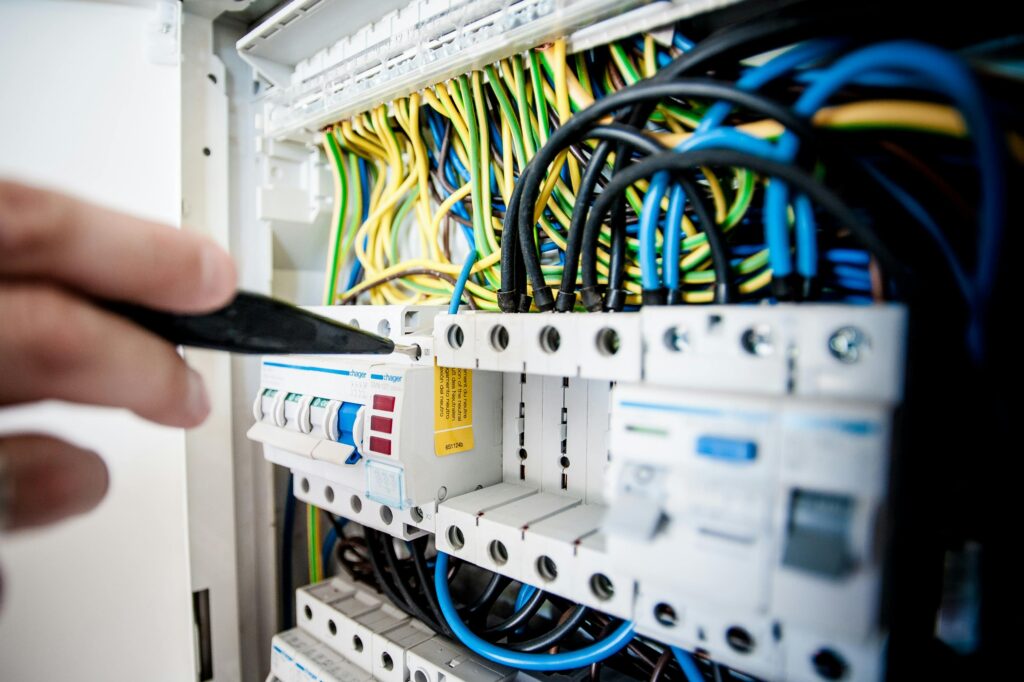
This guide breaks down the differences in plain terms, shows where traditional wiring still fits, and explains why structured cabling is the better choice for most growing Philippine workplaces.
What Is Traditional Wiring?
Traditional wiring is the older approach where each device or area is connected using individual cable runs, often added over time without a unified plan. You might see this in offices that started small and kept expanding. Every new workstation, phone line, or access point gets its own direct cable route to a switch or patch point.
How traditional wiring usually happens
- A small network is installed for the initial team
- New users or rooms are added later
- More cables are pulled wherever space is available
- Documentation and labeling are inconsistent, or missing entirely
Traditional wiring works for basic needs, but it becomes messy in real workplaces that change and grow.
What Is a Structured Cabling System?
A structured cabling system is a planned, standards based network backbone. Instead of random cable additions, it uses a consistent layout, pathways, termination points, and labeling methods. It connects the entire building through a clean hierarchy of backbone and horizontal cabling.
A good structured cabling installation is designed for both current use and future expansion.
Key features of structured cabling
- Organized cable routes and pathways
- Standard termination points and patch panels
- Clear labeling and documentation
- Modular design for easy expansion
- Built to support both voice and data cleanly
Structured Cabling vs Traditional Wiring: The Key Differences
1. Design and Layout
Traditional wiring grows based on immediate needs. It is reactive. Cables go where they can fit, not where they should.
Structured cabling starts with engineering design. Cable routes, bandwidth needs, and equipment rooms are mapped before installation begins.
Result: structured cabling stays clean and efficient, even years after deployment.
2. Performance and Stability
With traditional wiring, signal issues show up as cable runs increase. The network may slow down, Wi Fi may degrade, and troubleshooting becomes a cycle of patch fixes.
With structured cabling, cable lengths, quality, and routing follow standards. This protects signal integrity across copper and fiber.
Result: structured cabling delivers more stable performance for LAN, WAN, and Wi Fi.
3. Scalability
Traditional wiring becomes harder to scale because:
- pathways get crowded
- cabinets become tangled
- new runs are harder to trace
- downtime risk increases during expansion
Structured cabling is modular. Adding users, workstations, or even whole floors can be done by extending the system cleanly. Result: structured cabling supports growth without messy rework.
4. Troubleshooting and Maintenance
Traditional wiring slows down IT teams because cables are often:
- unlabeled or inconsistently labeled
- routed unpredictably
- undocumented
- hard to isolate during faults
Structured cabling makes troubleshooting faster because every line is planned, labeled, and documented.
Result: less downtime and faster repairs.
5. Long Term Cost
Traditional wiring can look cheaper at the start because you only pay for what you need today. But over
- time, hidden costs add up:
- repeated rewiring
- extra labor for troubleshooting
- downtime impact on operations
- limitations that force early replacement
Structured cabling requires better planning and cleaner installation, so the initial cost can be higher. But the lifecycle cost is lower because the system lasts longer and scales cleanly.
Result: structured cabling is the better long term investment for most businesses.
Quick Comparison Table
| Factor | Traditional Wiring | Structured Cabling System |
| Approach | Reactive, add as needed | Planned, standards based |
| Layout | Often scattered and messy | Organized pathways and hierarchy |
| Performance | Can degrade over time | Consistent and stable |
| Scalability | Harder and riskier to expand | Designed for growth |
| Maintenance | Slow troubleshooting | Fast, audit ready support |
| Total Cost | Lower start, higher long term | Higher start, lower long term |
When Traditional Wiring Still Makes Sense
There are cases where traditional wiring is still acceptable:
- very small offices with no growth expected
- temporary sites or short term leases
- single room setups with minimal devices
- budget limited scenarios where structured planning is not possible
Even in these cases, basic standards and documentation should still be followed to avoid future headaches.
Why Structured Cabling Is Better for Philippine Businesses
- multi floor expansions
- moving staff between departments
- adding devices every year
- Wi Fi growth and higher bandwidth needs
- audits for compliance and turnover
Structured cabling fits these realities because it creates a backbone that keeps working even when the business changes.
It also aligns well with BPOs, commercial offices, schools, hospitals, and multi branch environments where stability and uptime matter every day.
How to Decide for Your Site
- Ask these practical questions:
- Will your team size grow in the next 2 to 3 years?
- Are you adding more devices, access points, or networked systems?
- Do you want faster troubleshooting and cleaner audits?
- Is downtime costly to your operations?
- Are you expanding to more floors or branches?
If you said yes to even two of these, structured cabling is the smarter route.
Bottom Line
Traditional wiring can keep a small office running, but it struggles in modern workplaces that grow, move, and rely heavily on stable connectivity. A structured cabling system gives businesses a clean Layer 1 foundation that supports Layer 2 networks, Wi Fi performance, long term stability, and easier maintenance.
Choosing structured cabling is not just about tidy cables. It is about protecting your network performance, lowering future cost, and building a backbone that scales with your business